
By Julien Bos, manager of PGR Habitat
By Julien Bos, manager of PGR Habitat
You are visiting a property, planning a renovation or simply wondering why a room stays cold. One question often comes up: what kind of glazing is fitted to these windows? Good news, all you need is a lighter and a few seconds to find out.
The 30-second trick
Bring a flame close to the window and count the reflections: 2 reflections for single glazing, 4 for double, 6 for triple. If one of the reflections is a different colour from the others, your glazing has an insulating layer.
How to do the test
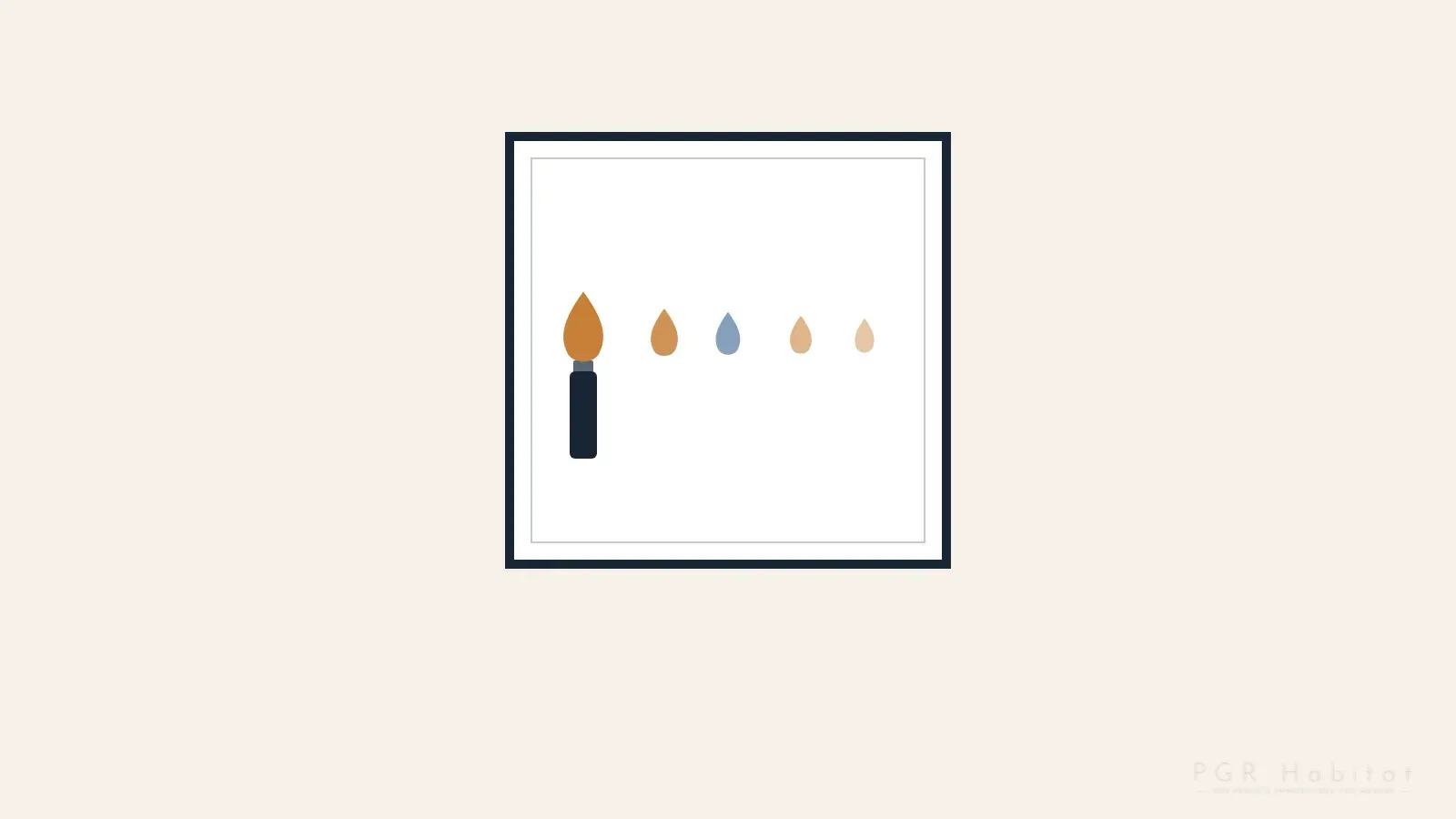
Ideally, do this in the evening or in a dimly lit room: the reflections will be much more visible. Light a lighter and hold the flame a few centimetres from the window. Then look at the glazing slightly from an angle, rather than straight on: you will see several small aligned flames appear, increasingly pale.
Would you rather avoid a flame near the curtains or seals? Your phone's torch works just as well: count the points of light instead.
Why it works
Each pane of glass has two sides, and each side returns a reflection. You therefore get:
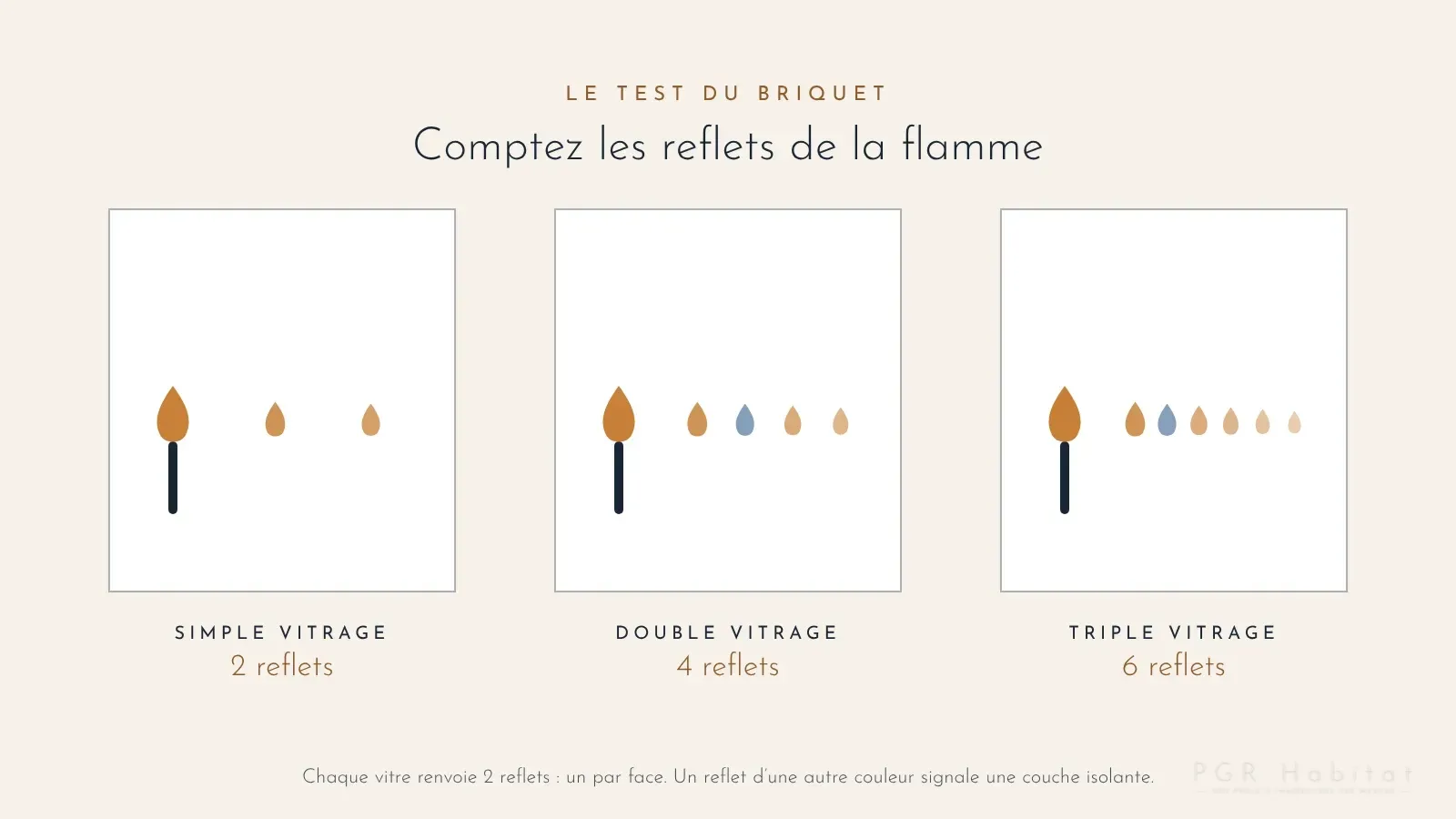
- 2 reflections: a single pane of glass, it is single glazing
- 4 reflections: two panes, it is double glazing
- 6 reflections: three panes, it is triple glazing
The distance between the reflections also provides an indication: the further apart the groups of reflections are, the larger the space between the panes.
The reflection that changes colour
Look carefully at the hue of the reflections. Usually, they are yellow-orange, like the flame. If one of them leans towards blue, purple or green, this is a sign of a low-emissivity layer: a metallic coating invisible to the naked eye, applied to one side of the glass. It reflects heat back into the interior of the home.
This is important information. Old double glazing without this layer insulates significantly less effectively than recent double glazing that is equipped with it. Two windows with "4 reflections" can therefore have very different performances.
Go further: read the spacer bar
Between the panes, around the perimeter, is a thin metallic or synthetic strip: the spacer bar. It often bears an inscription with the manufacturer's name, the date of manufacture and sometimes the composition of the glazing. For example, "4/16/4 Argon" means two 4 mm panes of glass, separated by 16 mm filled with argon. This inscription also tells you the age of your glazing.
The limitations of the test
The lighter test tells you how many panes make up your glazing and whether it has an insulating layer. On the other hand, it does not tell you the nature of the gas between the panes, the exact performance of the glazing, nor the state of its seal.
Also watch out for laminated glass, often used for security: it is made of two pieces of glass bonded by a film. This film reflects very little light, meaning that laminated glass may produce fewer reflections than expected.
An unmistakable sign: condensation between the panes
If you see condensation or whitish marks between the two panes, and not on the inside face, the glazing is no longer sealed. Its insulating capability is impaired. Good news: it is often sufficient to replace the glazing alone, without changing the entire window.
When should you call in a professional?
The lighter test is an excellent first reflex. However, it does not replace a comprehensive analysis, particularly:
- before buying a property, to assess the actual condition of the joinery and the budget to be anticipated
- before a renovation, to know whether to replace the glazing alone or the complete window, in line with the rest of the insulation
- in the event of persistent discomfort: draughts, recurring condensation, cold rooms
At PGR Habitat, we support you in the technical analysis of your property and in the preparation of your works, so that every euro invested is put in the right place.
Discover our expert support services → https://pgr.lu/expertise.